

The wine aisle is no longer a passive shelf. It is where personal ethics, health consciousness, and taste now converge. A narrow clique of experts does not lead the shift. It is driven by flexitarian consumers who reduce their intake of animal products without strict abstention and want products that align with their values without sacrificing quality. As this group scales across the UK and EU, their preferences are reshaping buying, menus, and retail assortments. They are choosing ethical wine — often certified as vegan, organic, or biodynamic — and made with low-intervention methods that favour careful farming and transparent cellar practices.
This switch is not a statement against pleasure. It is a decision for verified purity, credible farming, and wines that feel and taste cleaner. Put simply, quality and principle are no longer in tension. The same practices that avoid animal-derived processing aids and minimise the use of additives tend to deliver brighter fruit, finer textures, and better food compatibility. The result is a permanent realignment. Ethical wine has moved from niche to norm for a growing share of premium spend.
At the heart of the transition sit three forces. Health concerns steer drinkers toward shorter ingredient lists and trusted certifications. Sustainability priorities reward producers who regenerate soils and reduce chemical inputs. Sensory expectations favour clarity, freshness, and authenticity over heaviness or cosmetic winemaking. These drivers, taken together, explain why flexitarian buyers reach for certified vegan certification alongside organic and biodynamic seals. They want proof that the wine aligns with how they choose to eat, drink, and live.
The health imperative, clean labels, and fewer inputs
Flexitarian drinking starts with a simple filter. What am I putting in my body? Wine labelling rarely lists processing aids, so shoppers rely on trusted marks and producer transparency. Vegan wine certification confirms that no animal-derived fining agents were used. That single step signals a cellar that relies on gravity, time, plant-based or mineral aids, or advanced gentle filtration.
Organic certification strengthens the signal. It restricts the use of synthetic pesticides and herbicides in the vineyard and sets lower maximum sulphur ceilings than conventional standards. Producers who also work with native yeasts, cool fermentations, and careful oxygen management often reduce added sulphur further. For many drinkers, this is not about intolerance. It is a preference for wines that taste precise and feel less burdened by additions.
The health lens also covers texture and mouthfeel. Fining agents can strip colloids that contribute to the natural body. When a wine is gently unfined or clarified, it retains more of its intrinsic texture. That texture matters with modern plant-forward cooking, where nuts, seeds, fermented elements, and olive oil emulsions bring density and savour. Flexitarian buyers notice that these wines sit lightly on the palate while carrying flavour.
Fun fact: EU labelling requires “Contains sulphites” when thresholds are exceeded, but many processing aids used during fining are legally classed as “processing aids,” not ingredients, and are not listed on the label.
Sustainability that consumers can actually verify
Flexitarians want alignment between everyday choices and environmental impact. Sustainable wine gives them a practical route. Organic and biodynamic viticulture builds soil structure, supports microbial life, and encourages biodiversity through cover crops and reduced chemical pressure. Healthier soils improve water retention and resilience in hot summers and wet springs. They also support vines that achieve flavour ripeness with balanced sugars and acids, which helps limit cellar intervention later.
Biodynamic certification, when available, raises the bar even higher. It requires whole-farm thinking, composting regimes, and disciplined vineyard timing. While some aspects divide opinion, the agronomic outcomes are visible. Vineyards under long-term regenerative care require fewer emergency inputs and often show steadier fruit quality across variable seasons. The environmental dividend is straightforward. Less synthetic input upstream aligns with lower additive needs midstream and a cleaner waste profile downstream.
Packaging is part of the footprint. Flexitarian buyers are receptive to lighter glass or alternative formats where appropriate. The key is honesty about trade-offs. Premium sparkling or long-ageing reds still need stronger vessels. Fresh, early-drinking whites and rosés travel well in lighter bottles or cans. Ethical producers who right-size packaging without compromising stability give consumers a tangible way to reduce impact without downgrading quality.
Quality crossover: why ethical methods improve flavour
Quality is the clincher. Flexitarian consumers return to ethical wine because it tastes compelling. The production choices that remove animal products and reduce additives also preserve nuance. Native yeast ferments can broaden aroma palettes with floral, spice, and savoury notes that commercial strains sometimes flatten. Unfined and gently handled wines keep their natural colloids and phenolics, which read as depth and line on the palate. Lower new oak and restrained extraction let acidity and mineral cues carry the finish.
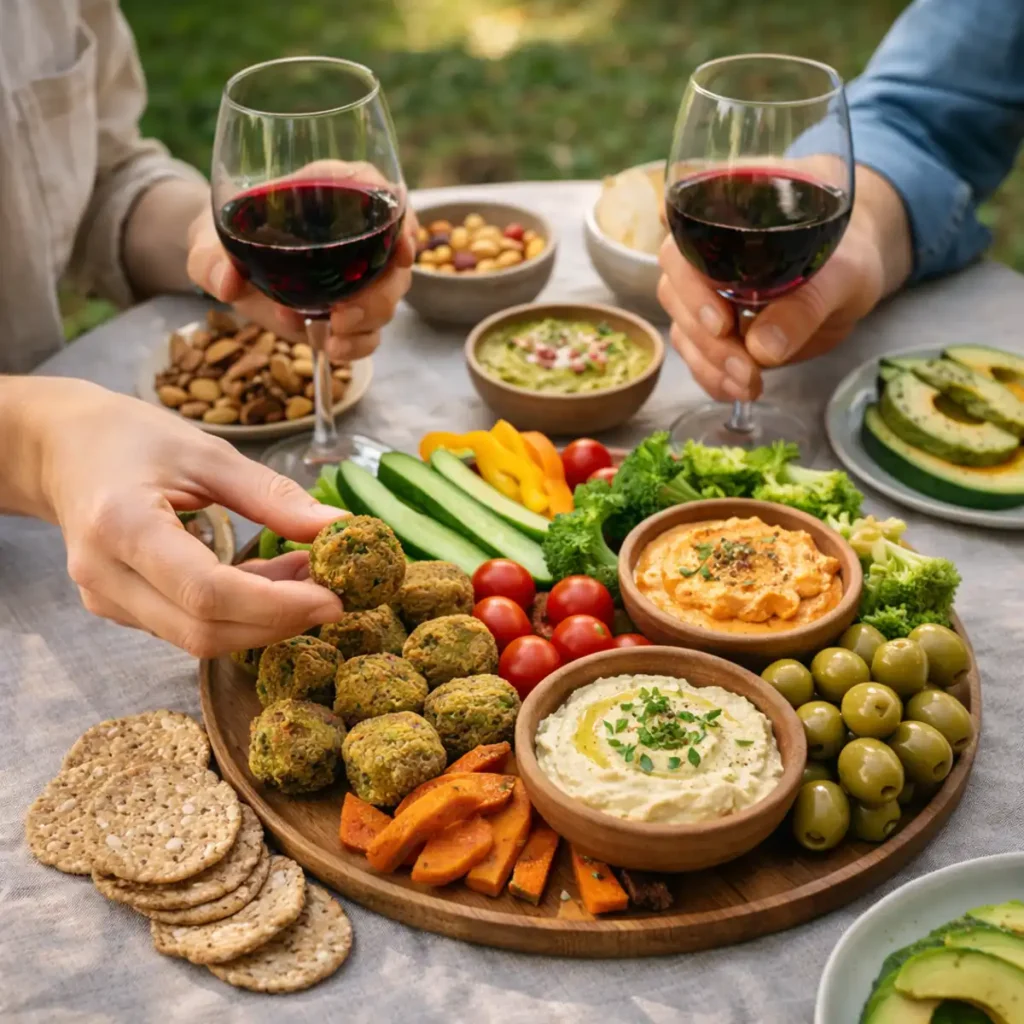
These wines also work better at the table. Bright acids cut richness in cashew sauces and coconut-based curries. Fine, supple tannins play with brassicas and herbs without turning metallic. Citrus-driven whites meet tomatoes and pickles head-on. For omnivores, the same rules apply. Ethical wines are versatile with poultry, seafood, and vegetables alike because they prioritise balance over weight. That versatility fits how flexitarians actually eat.
Across styles, a few themes stand out. Skin-contact whites bring a gentle grip that suits miso, sesame, and roasted mushrooms. Cool-climate reds from Gamay, Pinot Noir, or Cabernet Franc deliver lift and sap without bitterness. Riesling, Albariño, and Grüner Veltliner offer scalpel-like acidity for salads and fried dishes. None of this requires abandoning classic regions. It calls for picking producers whose farming and cellar work foreground fruit purity and site transparency.
What vegan certification really guarantees
The word vegan on a bottle can mean different things informally. Certification removes ambiguity. Reputable marks such as the Vegan Society Trademark or V-Label verify that no animal-derived products are used in fining or as ingredients, and that ancillary materials, such as label adhesives, meet the same standard. That audit trail matters because many cellar aids are not listed. Certification gives buyers a simple on-pack truth signal.
In the cellar, vegan choices include bentonite clay, pea or potato proteins, or time and gravity for clarification. In modern facilities, cross-flow filtration can polish a wine while preserving colloids and aroma. The point is not to chase absolute zero intervention for its own sake. It is to use the lightest effective touch so that chemistry serves flavour rather than masking it. Certification confirms the line has been held on animal inputs while leaving room for technical care where needed.
How retailers and restaurants adapt to flexitarian demand
Merchants now group wines by farming and process credentials alongside region and grape. Clear shelf talkers and digital filters for vegan wine, organic wine, biodynamic wine, and low intervention wine reduce friction at purchase. Mixed cases curated around plant-based cooking styles help customers learn by tasting. For example, a set built for Asian-influenced suppers might include a dry Riesling, a lightly aromatic skin-contact white, and a fresh, low-extraction red.
Restaurants respond in two ways. First, by adding icons or short notes indicating vegan certification and farming methods. Second, by rewriting the pairing language. Instead of “big red for steak,” lists highlight acid, texture, and umami affinity that apply across dishes, whether they include meat or not—staff training matters. When teams can explain how clarity without animal fining protects mouthfeel, or why native yeast adds savoury complexity, guests connect ethics to flavour rather than treating them as bolt-ons.
Addressing common doubts and myths
A few objections surface repeatedly. One is that ethical wine costs more. Often true, and usually justified by higher manual labour, lower yields, certification fees, and quality-driven choices. Value remains in lesser-known appellations, cooperative projects that have converted to organic farming, and producers who save costs by using time rather than expensive inputs. Another concern is stability. The best low-intervention producers combine clean fruit, spotless cellar practice, and appropriate filtration at bottling. Their wines age on merit and arrive consistently on the table.
There is also a lingering view that vegan fining or gentle filtration inevitably strips flavour. That criticism belongs to older methods. With today’s membranes and careful process control, producers can achieve microbiological stability while retaining colour, colloids, and aromatic lift. The most convincing evidence is in the glass. Ethical wines win repeat custom not because of a badge but because they deliver pleasure with precision.

Practical buying signals for flexitarian shoppers
Shoppers who want a simple checklist can use three tiers. First, confirm vegan certification to remove animal-derived processing aids from the equation. Second, look for the EU Organic Leaf or equivalent to verify farming inputs. Third, treat biodynamic marks from Demeter or Biodyvin as an added assurance of regenerative practice and whole-farm discipline. Not every good wine carries all three. Many small estate farms farm organically but lack funds for multiple audits. When in doubt, read producer notes and ask merchants who specialise in these categories.
Grape and region cues help too. Cooler sites and higher-altitude vineyards tend to produce naturally higher acidity, which aligns with modern palates and broad food pairing. Regions with established organic adoption, from parts of Austria and Germany to pockets of Loire, Piedmont, and Catalonia, offer depth of choice at fair prices. For reds, seek producers who favour whole-bunch or gentle extraction. For whites, prioritise estates known for extended lees contact and restrained oak.
The social dimension of how flexitarian norms spread
Flexitarian choices gain momentum through social proof. When hosts pour ethical wine at dinner, and guests find it delicious, the category grows. Trade initiatives build on that effect with pop-ups, city tasting weeks, and by-the-glass features in restaurants. Education matters, but the fastest engine is good drinking. When the style profile shifts toward freshness, bright aromatics, and digestibility, repeat purchase follows.
Producers also communicate more clearly. Many now publish farming practices, sulphur usage bands, and fining policies on back labels or websites. Importers and retailers add QR codes for deeper technical sheets. This transparency invites informed comparison. It also rewards estates that do the hard work in the field and cellar. Over time, that reward loop changes incentives across the supply chain.
Pairing principles that make ethical wine shine
Flexitarian eating patterns range widely, so pairing advice focuses on chemistry and structure rather than protein type. Match acid with acid in tomato-based sauces and citrus dressings. Use aromatic whites with a touch of residual sugar for spicy heat. Turn to skin-contact whites for umami and sesame-rich dishes where grip helps. Choose low-tannin, high-fruit reds for greens and brassicas to avoid bitterness. For dishes with nut-based creaminess, lees-aged Chardonnay or Rhône white blends bring weight without heaviness.
A simple framework helps on busy nights. If the dish is bright and sharp, pick crisp and saline. If it is rich and creamy, pick textural and layered. If it is earthy and savoury, choose wines with gentle oxidation or tertiary notes. Ethical producers who farm for balance make these decisions easy because their wines show clear lines and clean finishes.
Price and value are where to find smart buys.
Ethical wine does not require a luxury budget. Look to growers in emerging subregions, to cooperative bottlings that have transitioned to organic farming, and to early-release cuvées designed for freshness rather than oak ageing. Lighter glass often signals a producer who has considered the footprint and costs across the chain. Seasonal cases from specialists provide lower per-bottle prices and a guided path through styles.
For cellaring, focus on estates with a track record of clean, low-intervention practice and credible reviews over multiple vintages. Reds with moderate alcohol, fresh acidity, and fine tannin evolve into savoury complexity. Whites with strong acid backbones and careful reduction retain snap while gaining texture. Ethical does not mean ephemeral. The right bottles reward patience as reliably as their conventional peers.
Hospitality and workplace policies for inclusive wine lists
Restaurants and bars can meet flexitarian expectations without rewriting their DNA. Set a baseline target for certified vegan wine options by the glass. Make sure at least one red, one white, and one sparkling meets both vegan and organic criteria—train staff to explain the difference between vegan-certified and “suitable for vegans” claims. Align pairings to actual dishes rather than protein categories.
Workplace events can apply the same approach. Procurement teams can add certification fields to tenders and ask for sulphur usage ranges. Mixed cases for client entertaining should feature a spread of styles that pair broadly with modern menus. Clear standards improve inclusion and reduce friction for guests with ethical preferences, while improving the overall quality of what is poured.
Where the category goes next
Three developments will shape the next phase. First, packaging innovation and reuse systems will reduce downstream emissions for everyday wines. Second, vineyard robotics and sensor-driven decision tools will support organic farming at scale by improving canopy timing and disease prediction. Third, labelling clarity will increase as more producers disclose fining and filtration choices. Through it all, the flexitarian preference for proof over promises will hold. Certifications will remain the cleanest signal on a crowded shelf.
The larger cultural pattern is stable. Drinking less but better is a durable habit. Wines that taste vivid, finish clean, and show verifiable integrity fit that habit perfectly. As more producers meet these expectations, customers will not need to choose between ethics and excellence. They will buy both in the same bottle.
Conclusion: the permanent logic of flexitarian wine
Flexitarian drinking is not a fad. It is a rational response to modern concerns about health, environment, and authenticity. Ethical wine addresses those concerns through transparent farming and precise cellar work that preserve flavour rather than hide it. Vegan wine certification closes the door on animal-derived processing aids. Organic and biodynamic agriculture lifts soil health and fruit quality. Low-intervention methods preserve texture and allow aromatics to remain unmasked.
For non-vegans, the choice is pragmatic. These bottles often taste better with the food they are actually eaten with, from vegetables and grains to fish and poultry. They also sit comfortably with the values they apply elsewhere in life. The premium, where it exists, pays for manual labour, lower yields, certification, and thoughtful packaging. Against those inputs, the output is convincing. Cleaner lines. Clearer flavours. Greater confidence. The cork comes out, the glass is lifted, and the decision feels self-evident. In wine, as in many things, small daily choices shape the future. Choose the bottle that proves it in the glass.


