
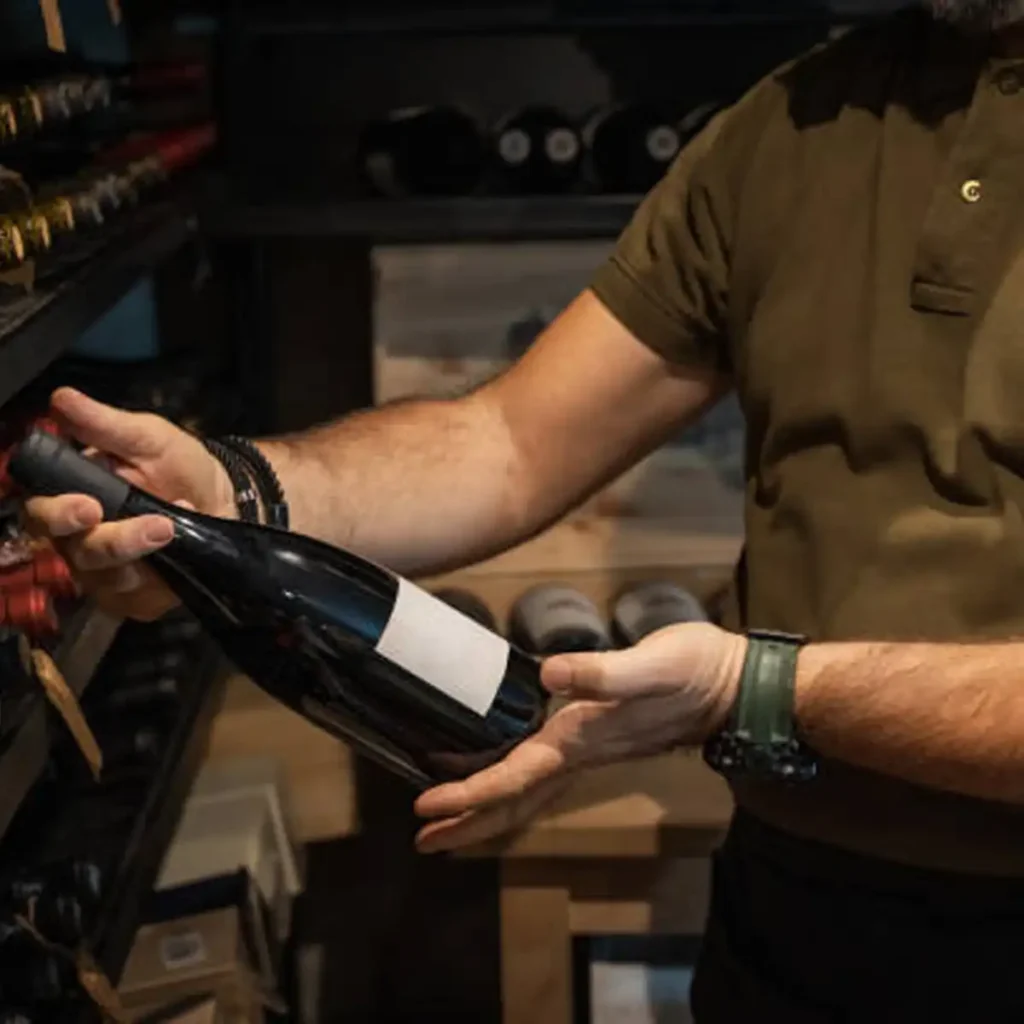
Is wine fermented grape juice? The honest answer is more complicated. Between the vineyard and the bottle sits an often invisible step that shapes clarity, stability and mouthfeel. That step is fining, which is why many bottles are not suitable for a vegan diet. As drinkers pay closer attention to farming, additives and cellar practice, vegan wine has moved from lifestyle preference to a marker of intent. It signals a producer’s commitment to minimal intervention, supply chain transparency and product integrity.
Interest in organic wine, biodynamic wine and natural wine has expanded the conversation. Vegan suitability is not guaranteed by any one farming standard. It depends on what happens in the cellar. This feature explains why fining exists, which agents are used, and how cruelty-free alternatives support clarity without compromising ethics. It also explores certification, labelling and purchasing strategies so that sommeliers, buyers and curious drinkers can navigate the market with confidence.
The purpose is not to scold tradition. Fining originated as a practical response to haze, bitterness and instability at a time when filtration was crude and time was short. The goal today is to assess what is necessary, what is optional and what aligns with a move toward cleaner ingredient lists and fuller disclosure. The result is a clearer view of purity that respects both craft and conscience.
Why some wines are not vegan
Fining is a clarification step used to bind and remove unstable proteins, phenolics and other colloids that create haze or hardness. Agents are added to a tank or barrel, form complexes with target compounds, and then settle, allowing the clear wine to be racked off. The process does not aim to leave residue in the bottle, yet trace amounts can remain. Historically, common fining agents were casein from milk, isinglass from fish bladders, egg white and gelatine from animal collagen. Their use renders a wine non-vegan, regardless of how small the carryover might be.
Producers describe these materials as processing aids because they are removed before bottling. Many jurisdictions treat them differently from ingredients, so labels have not always disclosed their use. That gap has frustrated consumers who would otherwise choose in line with their values. The modern response has three tracks. First, some wineries stop fining entirely and rely on time and gravity—second, many switch to bentonite clay or plant-based fining as vegan alternatives. Third, the market is pushing towards more explicit labelling and certification so that buyers can match expectations to practice.
What fining is and why wineries use it
Wine is a colloidal system. Proteins, polyphenols, tartrates and yeast fragments remain suspended after fermentation. If left alone, some will settle. Others stay in solution and can create haze when the wine is heated, chilled or shipped. White wines are especially prone to protein instability. Red wines can show coarse tannins or bitterness that producers aim to smooth before release. Fining materials work through charge attraction and selective binding. Positively charged proteins are captured by negatively charged particles such as bentonite. Gelatine and isinglass act differently, moderating phenolics and clarifying colour.
The decision to fine is not binary. It is a choice among tools, timelines and stylistic targets. Cellar managers balance the desire for brightness and shelf stability with retention of flavour and texture. Advances in cold stability management, filtration and oxygen control have reduced reliance on animal products, but they have not eliminated the need for judgment. Understanding the toolkit is essential for anyone who wants to evaluate the vegan status and intervention level of a wine.
The traditional non-vegan agents are explained
Casein, isinglass, egg albumen and gelatine became common because they are effective, inexpensive and familiar.
Casein, derived from milk, is often used in white wines to reduce browning and oxidative notes. Isinglass, a fish protein, has a long history in beer and wine for producing a brilliant polish in delicate whites. Egg white is a classical treatment in red Bordeaux to soften angular tannins in the barrel. Gelatine removes a broader range of phenolics across both colours. Each of these agents is introduced, allowed to interact and then removed by settling and racking. The practice delivers speed and a clean look, but it conflicts with vegan and some allergy preferences. It also raises questions about transparency when labels do not specify what was used.
Purity through patience, time and gravity
The lowest intervention approach is to let time do the work. After fermentation, solids settle naturally. Winemakers perform careful racking to move clear wine off the lees without stirring up sediment. Successive rackings produce clarity without additives. This method suits producers who can afford more extended maturation and who prize texture and aromatic nuance over glassy brightness. It also aligns with traditional cellaring in large foudres or neutral barrels where oxygen ingress is gentle and microbiological stability is maintained through vigilant hygiene.
There are trade-offs. Time in the tank or cask ties up capacity. Extended ageing can increase cost and risk, and not every wine style benefits from it. Yet patience preserves the wine’s full spectrum and removes only what gravity dictates. Many minimal intervention wine producers choose this path because it supports purity with the fewest moving parts.
Fun fact: Before modern filtration, nineteenth-century estates often relied on winter cold and repeated rackings to clarify wine. The method still works and is entirely vegan.
Vegan fining alternatives that work
When stability or timelines demand intervention, vegan options provide effective routes to clarity.
Bentonite clay is the benchmark for protein stabilisation in white and rosé wines. It carries a strong negative charge, binding positively charged proteins into heavier complexes that settle. Bentonite is natural, inert and widely available. Dose trials are essential because overuse can strip aroma. Skilled cellars run bench tests to find the minimum practical addition, then hydrate and disperse the clay properly to avoid clumping and inconsistent results.
Plant-based proteins from pea or potato deliver targeted softening of phenolics in both colours. They can mimic the effect of egg white without animal input and are often allergen-friendly. As with any fining step, trials determine dose rates and contact times. The aim is to tame bitterness or coarse grip while retaining structure. Modern products come with detailed technical sheets that outline performance windows so that results are predictable.
Silica sol and chitosan alternatives appear on some technical sheets for haze management and microbial control. For vegan buyers, it is essential to confirm the source. Chitosan can be derived from shellfish or from fungal sources. Only the latter suits a vegan standard.
Filtration is getting clarity without heavy-handed stripping.
Filtration is often caricatured as a blunt instrument that removes flavour. The reality depends on technology and settings. Pad or plate filters at high pressure can flatten texture if used aggressively. In contrast, cross-flow filtration moves wine tangentially across a membrane so that fouling is reduced and pressure remains modest. The method is additive-free and delivers microbial stability and polish with less impact on aroma. Decisions about pore size, temperature and timing are critical. Filtration is not a substitute for sound cellaring, but it can replace fining in many cases or reduce the dose required.
For sparkling wines and low-sulphur styles, sterile filtration before bottling can improve safety without resorting to animal agents. The choice should be disclosed where possible so consumers can evaluate the trade-offs.
Labelling and certification: why transparency matters
Because animal fining agents are classed as processing aids in many markets, producers have not always been required to list them. That leaves drinkers guessing. Certification helps to bridge the information gap. Logos from The Vegan Society and V Label require documented proof that animal-derived inputs are excluded at every stage. Audits look beyond the fining tank to glue, cork and capsule materials so that the whole package is compliant.
Certification is not a quality score. It is a traceability guarantee. For non-vegan drinkers, the mark still functions as a proxy for clean winemaking because it shows the producer has interrogated the supply chain and chosen minimalist inputs. For hospitality buyers and sommeliers who need to answer questions at the table, certification simplifies staff training and avoids awkward uncertainty.
Retailers and importers also play a role. Many now request technical sheets that state whether fining agents were used and whether they were plant-based. As labelling rules evolve, voluntary disclosure is becoming a competitive advantage for producers who have nothing to hide.

Vegan does not equal natural; understanding overlaps and limits
Vegan status covers the exclusion of animal products. It does not automatically speak to farming, sulphur additions or yeast selection. A winery can be vegan yet rely on cultured yeasts, enzymes and fining alternatives as part of a polished, modern style. Likewise, a natural producer can be vegan by default because no fining is performed, and gravity does the work. The two circles overlap widely but are not identical.
That nuance is proper. Buyers can prioritise what matters most for a given context. A restaurant pouring by the glass may want the reliability of protein stability achieved by bentonite. A specialist shop might prioritise unfined and unfiltered micro cuvées that celebrate texture. The shared ground is transparency and restraint. The fewer and more precise the inputs, the easier it is to explain the wine, aligning better with a move toward simpler labels and trust.
Sensory impact of what fining and filtration changes in the glass
Clarity is not just visual. Fining and filtration alter texture, aromatic lift and tannin shape. Egg white softens astringency in reds by binding larger tannin fractions. Plant proteins can achieve a similar effect with careful dosing. Bentonite reduces protein haze but can also drag down aroma precursors if used indiscriminately. Cross-flow filtration can brighten aromatics by removing dulling particulates, yet overly tight membranes may shave complexity.
Producers hedge against loss by running small-scale trials. They taste before and after, adjust the dose and contact time, and decide whether any clarity gain justifies a change in mouthfeel. For drinkers, the practical lesson is simple. Cloudiness is not a flaw by itself. Light haze can be a signature of a minimally handled wine. Conversely, crystalline brilliance does not imply heavy manipulation if the cellar used time, racking and modern membranes wisely.
Health and safety considerations, allergens and stability
Allergen disclosure has improved, particularly in markets that require a statement when egg or milk-based agents are used. Vegan wines avoid those allergens by design. Stability is also part of consumer safety. Protein-unstable wines can form haze in warm supply chains, which triggers returns and waste. Bentonite remains a robust answer. Where producers prefer not to fine, they can cold stabilise, rack frequently and bottle under strict hygiene to keep haze and microbiological issues at bay. None of these steps should be mysterious. They are part of responsible cellar management and can be communicated without marketing spin.
Buying strategies for trade and consumers
For hospitality teams, start with a producer’s technical sheet. Look for explicit statements about fining and filtration. If the sheet says unfined and unfiltered, confirm that the wine has been racked and is microbiologically stable for service. When the sheet lists bentonite or pea protein, note that the wine is vegan-friendly. Ask whether cork glue and capsule polymers are certified. Build a list that notes vegan suitability clearly so staff can guide guests without hesitation.
For retail buyers and the public, vegan wine certification removes guesswork. Where logos are absent, look for mention of bentonite clay, plant-based fining or cross-flow filtration on producer pages. Natural and biodynamic claims are helpful but not definitive. Trust producers who publish complete ingredient disclosures and who answer questions directly. If a favourite wine is not certified, write to the winery. Many adopt certification after repeated customer requests.
Environmental context, sustainability, and the bigger picture
The shift to vegan fining agents fits into a broader conversation about sustainability. Animal-derived products carry their own supply chains. Moving to mineral or plant-based inputs reduces reliance on those external streams and simplifies traceability. Longer ageing and natural settling increase energy use in cellars if tanks are temperature controlled, yet they also reduce additives and waste associated with fining and filtration. Producers weigh these factors against style and cost. The direction of travel is clear. Less is more, provided stability and safety are maintained.
Myths to retire
Wine cannot be brilliant without animal fining. False. Gravity, careful racking and modern membranes can deliver clarity.
Vegan wines are always cloudy. False. Many are sparkling bright due to bentonite or cross-flow.
Bentonite ruins the aroma. Sometimes, if overdosed. With bench trials and proper hydration, impact can be minimal.
Unfiltered wines are unsafe. Not inherently. Good hygiene, cold stability and sulphur management keep wines sound.
Certification is marketing fluff. It is documentation. It helps buyers verify practice when labels are silent.
Practical cellar examples
A white wine from a warm site shows protein haze risk after heat testing. The cellar runs bench trials with hydrated sodium bentonite, finds the lowest effective dose, stirs, settles and racks. The wine remains vegan and stable in shipment.
A structured red shows coarse tannin at racking. The team trials pea protein at incremental doses, targets specific phenolic fractions and achieves a softer palate without animal products. A light cross-flow polish before bottling secures microbial stability.
A skin contact white with light haze is left unfined. The producer relies on winter cold, two rackings and strict oxygen management. Bottling is performed with a coarse pad filter only to remove large particles. The label states unfined and unfiltered, and the wine is certified vegan.
Culture, cuisine and service
Vegan suitability intersects with the table. Plant-forward menus have expanded in fine dining and neighbourhood restaurants alike. Wines that are vegan by design make pairings smoother for mixed groups. Texture matters with plant dishes. Whites with gentle lees weight and reds with supple tannins complement pulses, grains, and umami-rich vegetables. The cellar decisions covered here influence those textures more than many drinkers realise. Staff who can explain them build trust and repeat business.
Conclusion: choosing purity with confidence
Vegan suitability is a straightforward question that opens into the craft of winemaking. It invites producers to justify each additive and each step. It pushes labels toward fuller disclosure. It empowers drinkers to choose wines that respect both vineyard and values. The practical routes are well established. Patience and gravity when time allows. Bentonite clay or plant-based fining when stability demands action. Cross-flow filtration is used when a polish is needed without the use of additives, and certification is required to document the path.
The result is not doctrine. It is a steady move towards wines that speak with fewer intermediaries. In the glass, that restraint reads as clarity of flavour, honest texture and a finish that feels unforced. In the market, it reads as trust. As the proverb says, fine words do not produce fine wine. Careful choices do.


