
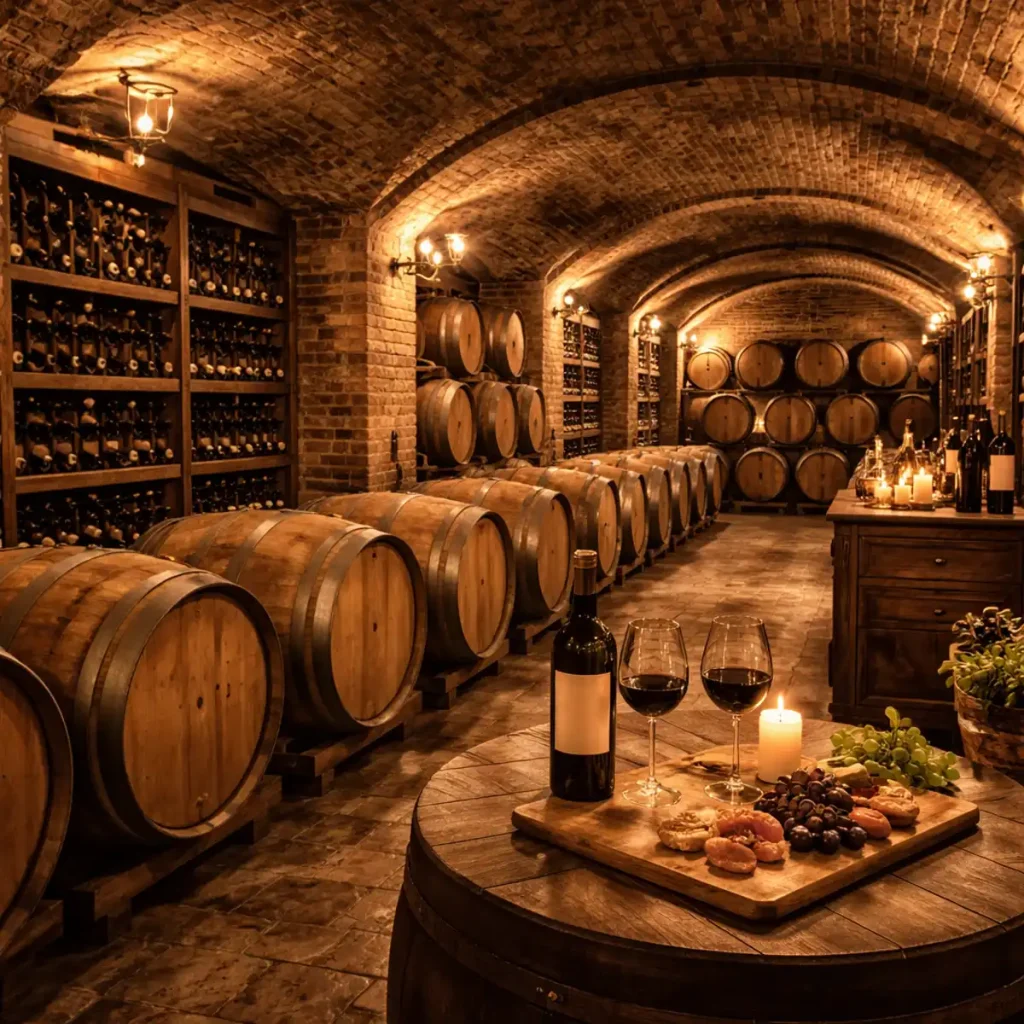
The most important shift in natural wine culture for 2026 is not a new region or winemaking technique. It is a change in behaviour. Wine drinkers are actively choosing bottles without familiarity, reputation or shorthand. The rise of the blind date bottle reflects a broader move away from brand reassurance and towards curiosity, resilience and place. Unknown grapes are no longer niche curiosities. They are central to how engaged drinkers explore flavour, sustainability and value.
This matters for buyers and professionals alike. For consumers, unknown grapes offer fresher experiences and often better pricing. For growers, they represent climate-adapted varieties with deep local histories. For merchants and sommeliers, they provide narrative depth and differentiation in an increasingly crowded market. 2026 marks the point at which discovery is no longer a side interest, but a mainstream expectation.
What follows is a detailed examination of why unfamiliar grape varieties now sit at the centre of natural wine culture, how climate and farming have accelerated this shift, and which grapes are shaping buying decisions this year.
Why Wine Drinkers Are Moving Beyond Familiar Grapes
The move away from international varieties is driven by fatigue rather than rebellion. Many drinkers recognise that global styles have converged. Chardonnay, Merlot and Sauvignon Blanc now often taste more like winemaking decisions than places.
For engaged consumers, this has reduced excitement. The solution has not been higher prices or rarer appellations, but a return to specificity. Unknown grapes offer this naturally. They carry fewer stylistic expectations and are less manipulated to fit international norms.
For natural wine drinkers in particular, unfamiliar grapes align with the desire for transparency. A wine made from a local variety, grown close to where it evolved, often requires fewer inputs and less correction. This creates wines that feel direct and unmediated.
Another driver is education. Online retail, tastings and independent merchants now present lesser-known grapes with clarity rather than mystique. Drinkers no longer need prior knowledge to engage. Curiosity has become enough.
How Climate Change Has Accelerated Interest in Indigenous Grapes
Climate pressure has reshaped viticulture across Europe. wide international varieties were selected for temperate conditions that no longer exist. Heat spikes, drought and unpredictable rainfall have exposed their limitations.
Indigenous grapes, by contrast, evolved in their environments over centuries. Many are naturally drought-tolerant or capable of retaining acidity under heat. This makes them valuable not only culturally, but practically.
In regions such as southern Italy, Greece and Portugal, growers have increasingly returned to local varieties after decades of replacement. The results are not experimental. They are often more stable and expressive than international alternatives.
For buyers, this means unknown grapes are not riskier choices. In many cases, they are better suited to current conditions and produce more consistent wines year to year.
What Defines an Unknown Grape in 2026
An unknown grape is not defined by rarity alone. Some have long histories and substantial plantings, but remain outside mainstream awareness. Others were nearly lost and have been revived through small-scale farming.
What unites them is limited global branding. These grapes are typically tied to specific regions and lack the international shorthand of wide varieties. This allows them to be shaped more by site and farming than by market demand.
In natural wine contexts, these grapes often appear with minimal intervention. Fermentations rely on native yeasts. Sulphur use is restrained. Filtration is rare. The grape is allowed to show its structure and aromatic profile without cosmetic adjustment.
Xinomavro and the Appeal of Structure and Acidity
Xinomavro has emerged as one of the most significant red grapes for engaged drinkers in 2026. Grown primarily in northern Greece, it produces wines with high acidity, firm tannins and savoury aromatics.
Often compared to Nebbiolo, Xinomavro offers a similar structural profile but with its own character. Tomato leaf, dried herbs, olive and red fruit are common markers. In natural expressions, these elements feel lifted rather than heavy.
What makes Xinomavro particularly relevant now is its adaptability. It retains freshness in warm conditions and responds well to organic and biodynamic farming. Low intervention examples show clarity rather than austerity.
For buyers, Xinomavro offers longevity and food compatibility at prices that remain accessible compared to more established fine wine regions.
Susumaniello and the Return of Southern Italian Freshness
Susumaniello was once widely planted in Puglia due to its productivity, then nearly disappeared as yields declined with vine age. Its revival has coincided with a renewed interest in freshness over power.
Despite deep colour, Susumaniello wines are often light on their feet. Dark berry fruit is balanced by natural acidity and moderate alcohol. In natural winemaking, the grape shows surprising lift and drinkability.
This profile appeals to drinkers looking for reds that work across seasons. Slight chilling enhances its freshness without diminishing structure. It also performs well with minimal sulphur, making it a common feature in natural wine selections.
For merchants, Susumaniello offers a clear alternative to heavier southern Italian reds, with strong storytelling around revival and place.
Baga and the Reassessment of Portuguese Reds
Baga has long been misunderstood. Traditionally associated with tough, tannic wines from Bairrada, it has benefited from changes in farming and extraction.
Modern natural expressions focus on earlier picking, gentler handling and shorter macerations. The result is wines with firm structure but notable freshness and aromatic precision.
Baga responds particularly well to Atlantic influence. Its acidity remains intact even in warmer years, and its tannins become more refined with careful farming. This makes it well-suited to long-term viticulture under changing conditions.
For collectors and drinkers interested in ageing potential without excessive alcohol, Baga offers a compelling option.
Assyrtiko and the Importance of Salinity
While Assyrtiko is more widely recognised than some other grapes, its role in the unknown grape movement remains significant. In natural wine contexts, it demonstrates how site expression can dominate varietal identity.
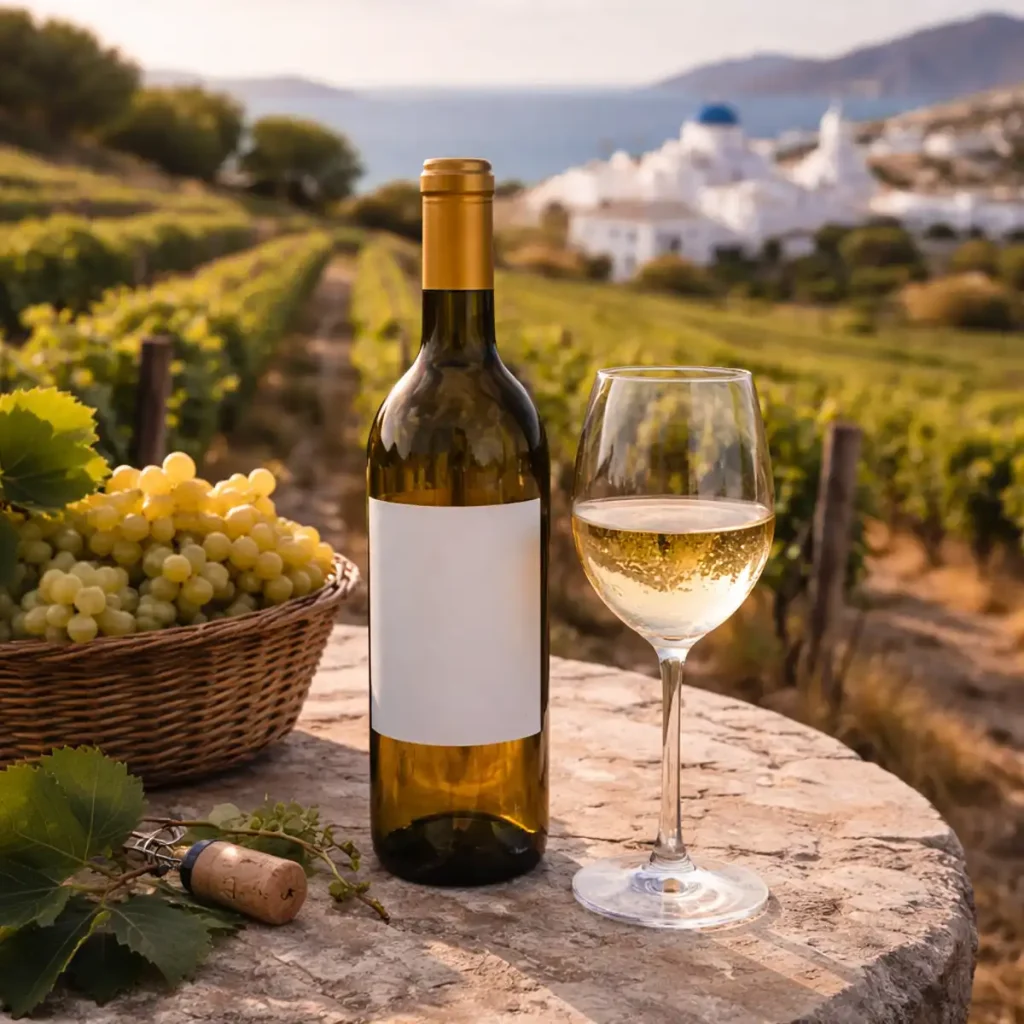
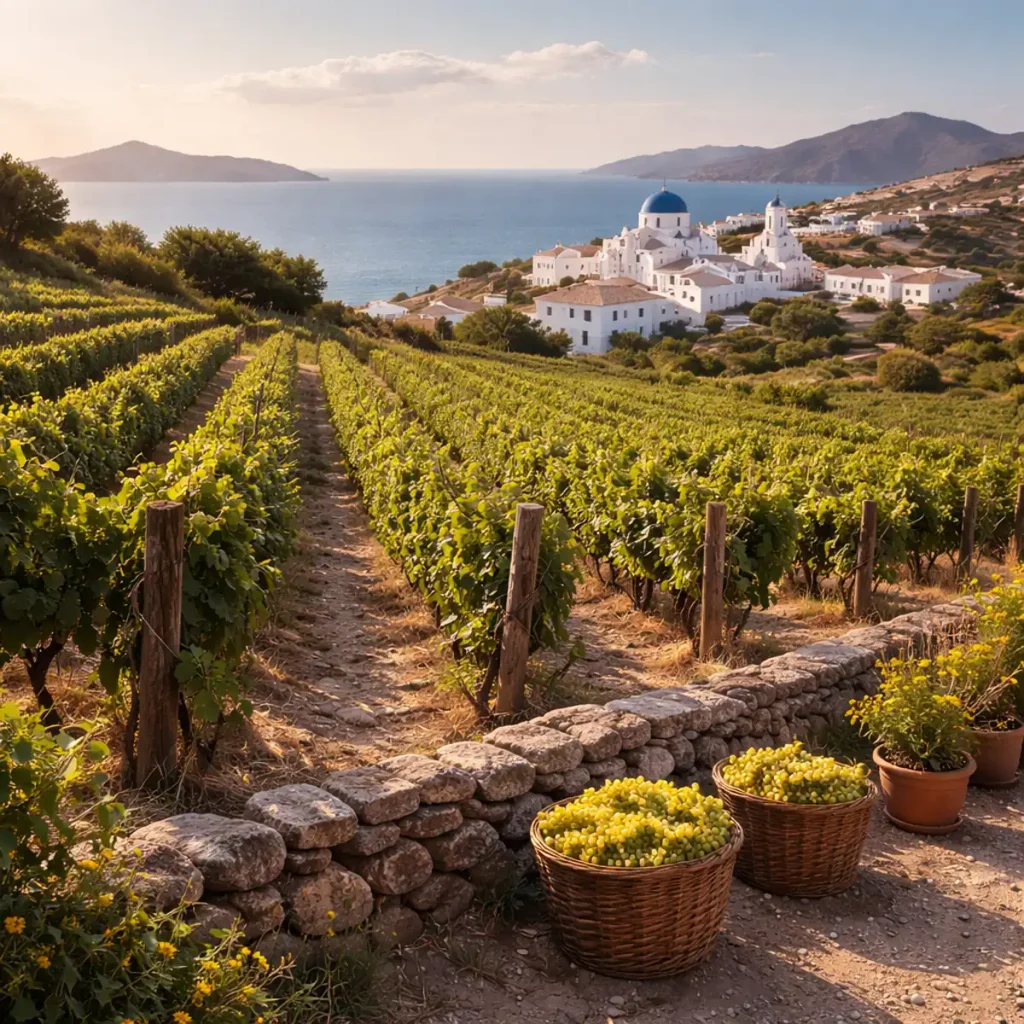
Grown in volcanic soils, particularly in Santorini, Assyrtiko produces wines with pronounced salinity, tension and acidity. These qualities persist even under extreme heat and limited rainfall.
Natural examples often avoid oak and excessive lees work, allowing mineral character to remain central. For drinkers, this offers a sharp contrast to richer international whites.
Assyrtiko also performs well in blends and skin contact styles, adding versatility for producers and merchants.
Nerello Mascalese and the Appeal of Volcanic Sites
Nerello Mascalese has become a reference point for volcanic wines. Grown on the slopes of Mount Etna, it combines altitude, soil diversity and old vines.
The grape produces wines of moderate colour, fine tannins and complex aromatics. Red fruit, ash, herbs and floral notes are common. Natural vinification enhances these characteristics without exaggeration.
What makes Nerello Mascalese relevant in 2026 is its balance. Alcohol levels remain moderate. Acidity is preserved. Farming at altitude mitigates heat stress.
For buyers, Etna wines offer site specificity and ageing potential at prices that still reflect relative obscurity compared to other fine wine regions.
How to Choose a Blind Date Bottle with Confidence
Choosing an unfamiliar grape does not require specialist knowledge. The most reliable indicators are farming approach, region and producer intent.
Look for wines grown organically or biodynamically. These practices often correlate with lower yields and greater site expression. Seek regions where the grape has historical roots rather than recent introduction.
Producer transparency matters. Clear labelling around farming, sulphur use and vinification suggests confidence rather than marketing. Avoid overly vague descriptions.
Serving temperature also plays a role. Many high-acid reds benefit from slight chilling. Whites and skin contact wines often show better balance when not overcooled.
Why Unknown Grapes Suit Modern Food Culture
Contemporary cooking emphasises acidity, texture and balance. Unknown grapes often align better with these values than richer international styles.
High acid reds pair well with vegetable-driven dishes, fermented flavours and umami-rich cooking. Saline whites complement seafood and minimalist preparations.
This compatibility has helped unknown grapes gain traction in restaurants and wine bars focused on natural wine. They support flexible pairing without overpowering dishes.
For home consumers, this means fewer rules and more adaptability across meals.
The Economic Case for Discovery Led Buying
From a buying perspective, unknown grapes often represent better value. Lower land costs, reduced brand premiums and smaller-scale production keep prices accessible.
As demand increases, some upward movement is inevitable. However, the diversity of varieties and regions limits speculative inflation. This contrasts with established fine wine markets.
For e-commerce buyers, discovery-led categories also reduce dependency on limited allocations. Stock availability is often more stable, supporting consistent listings.
Fun fact: Ampelographers estimate that fewer than 30 grape varieties account for the majority of global wine production, despite over 6,000 known cultivated varieties worldwide.
Where the Unknown Grape Movement Is Headed
The momentum behind unknown grapes shows no sign of slowing. Climate adaptation, consumer curiosity and transparent retail all support continued growth.
We are likely to see further diversification within regions rather than expansion into new ones. Forgotten local varieties will be replanted alongside established indigenous grapes.
Winemaking will continue to prioritise clarity over correction. The success of these wines depends on trust between producer and drinker, not technical polish.
For the wine sector, this represents a healthier ecosystem. Diversity increases resilience. Education replaces intimidation. Discovery becomes habitual rather than exceptional.
What to Taste Next
For readers new to this movement, start with one unfamiliar grape and revisit it across producers or regions. Taste comparatively rather than sequentially.
Engage with independent merchants who prioritise explanation over promotion. Ask about farming and vintage conditions.
Most importantly, approach unknown grapes without expectation. The value lies not in comparison to classics, but in understanding what each grape does well on its own terms.
The blind date bottle is no longer a novelty. In 2026, it is how engaged drinkers learn, explore and connect with wine again.


