
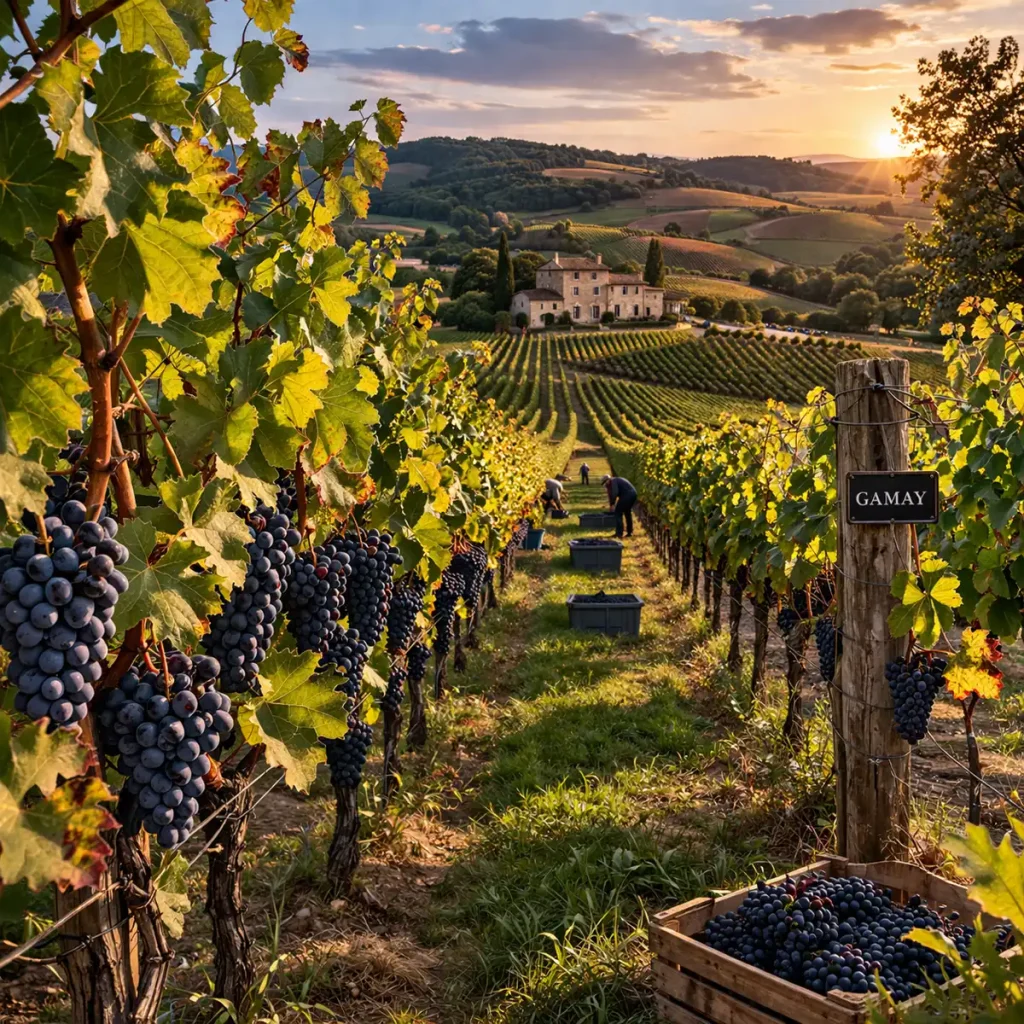
In 1395, Philip the Bold, Duke of Burgundy, issued an edict banning Gamay from the Côte d’Or vineyards he controlled, describing it as a ‘very bad and disloyal plant.’ He was protecting Pinot Noir’s commercial dominance. He was also, inadvertently, redirecting Gamay south to the Beaujolais hills, where it would spend the next 600 years becoming the most important single grape variety in the natural wine movement.
That is a compressed history, but it is not an exaggeration. Gamay natural wine from the Beaujolais, the Loire Valley, the Ardèche, and a growing number of other French regions now represents the most widely recommended entry point into natural wine for red wine drinkers in the UK market. The thin skin, the naturally high acidity, and the specific suitability of the variety for carbonic maceration make Gamay the grape that natural winemaking most clearly suits, and most consistently benefits from.
What Gamay actually is and why it suits natural winemaking
Gamay Noir a Jus Blanc is a thin-skinned, early-ripening red grape variety native to Burgundy. The thin skin means low tannin. The natural acidity means the wine retains freshness at the alcohol levels typical of minimal-intervention winemaking in cooler years. The combination makes Gamay unusually well suited to the choices natural producers make: low sulphite additions, no fining, carbonic or semi-carbonic maceration, and early bottling to preserve the primary fruit character.
Gamay does not require the chemical stabilisation that a thick-skinned, high-tannin grape needs to hold together in a bottle without additions. It has a natural structural balance that protects it through minimal-intervention vinification. The result is that natural Gamay, at its best, achieves the freshness, energy, and lightness that the natural wine movement aspires to for red wine without the winemaker having to compromise on any of the things they care most about.
Carbonic maceration and why it matters for Gamay character
Carbonic maceration is the winemaking method most associated with Gamay, and understanding it mechanistically explains why natural Gamay tastes the way it does. In carbonic maceration, whole uncrushed grapes are placed in a sealed vessel filled with carbon dioxide. Fermentation begins inside the intact berry, driven by intracellular enzymes rather than external yeast activity, and produces a wine with a distinctive aromatic profile: fresh red cherry, raspberry, a faint violet note, very soft tannins, and a juicy quality that Gamay made by conventional pressing does not achieve.
The intracellular fermentation also produces more glycerol than conventional fermentation, contributing to the round, smooth texture that makes natural Gamay so approachable. In semi-carbonic maceration, some berries are crushed under the weight of others, and a portion of the fermentation proceeds conventionally alongside the carbonic portion, producing more complexity and structure than pure carbonic maceration while retaining the freshness and fruit character that defines the best Gamay natural wine.
Fun fact: Jules Chauvet, the Lyon wine merchant and biochemist whose research in the 1950s and 1960s laid the scientific foundation of the natural wine movement, was working primarily with Gamay from the Beaujolais; his studies of carbonic maceration, the role of intracellular enzymes in fermentation, and the possibility of making stable, low-sulphite wine from healthy organic grapes became the intellectual framework on which Beaujolais natural producers built their practice.
Beaujolais — the crus and the natural wine producers
Beaujolais produces Gamay across a wide range of quality levels, from simple regional Beaujolais to the 10 crus, each of which has a distinct character shaped by its specific soils and microclimates. The crus where natural winemaking has been most consistently practised are Morgon and Moulin-a-Vent, both of which produce the most structured and age-worthy Gamay in the region.
Morgon, grown on decomposed blue granite and schist from the Côte du Py hillside in particular, is the reference point for serious Beaujolais natural wine: dark cherry, earth, and a mineral depth that develops over 5 to 10 years in bottle. Moulin-a-Vent, on manganese-rich soils, produces a firmer, more tannic style that in the hands of a natural producer working without additions, can resemble a light Pinot Noir after 5 years of bottle age. Both are wines for a patient buyer.
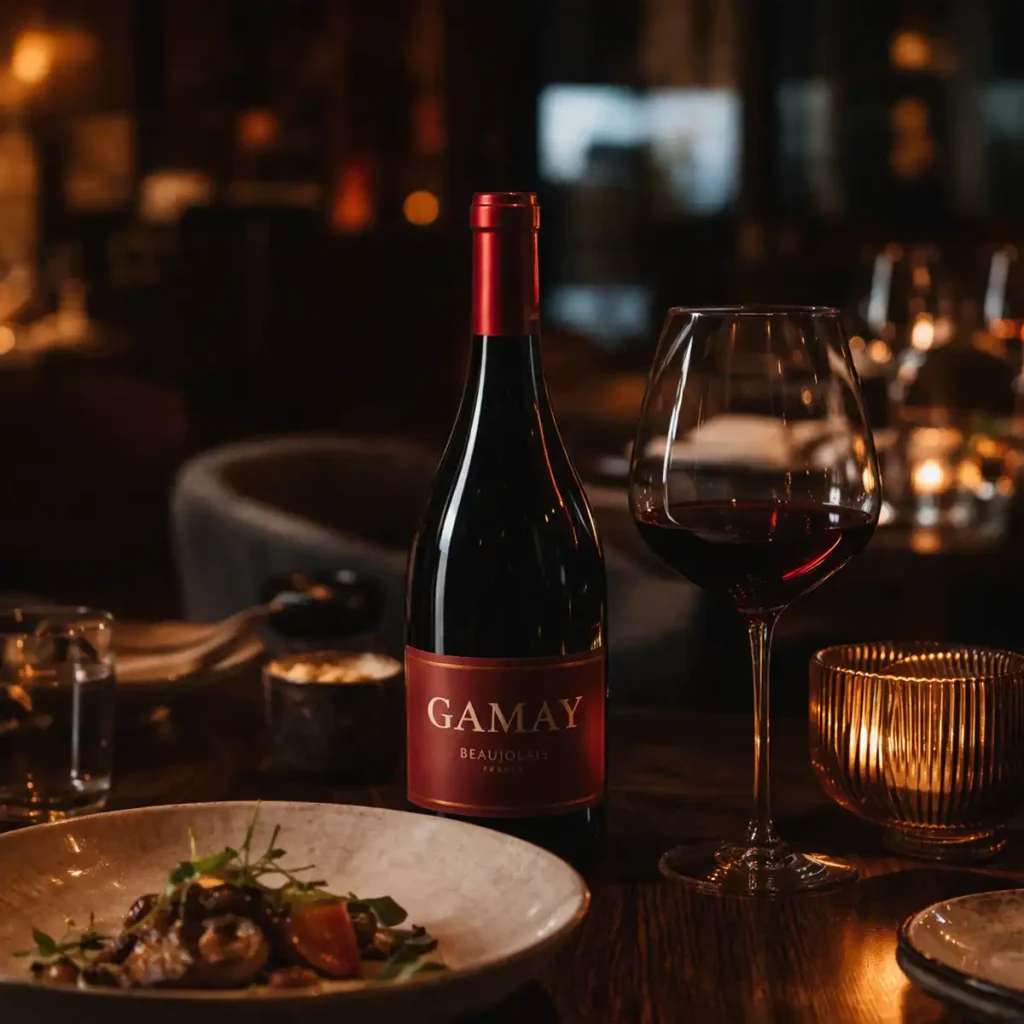
The lighter crus — Chiroubles, Fleurie, Saint-Amour — produce more immediately approachable Gamay, all fresh red fruit and gentle florals, best drunk within 2 to 3 years. For first-time buyers, a Chiroubles or Fleurie from a certified organic producer in the £18 to £24 range is the most reliable introduction to Beaujolais natural wine at its most accessible and immediate.
Gamay beyond the Beaujolais
Loire Valley Gamay has been central to the natural wine conversation since the 1980s. The Touraine, Anjou, and surrounding appellations contain organic and biodynamic producers working with the variety on tufa and schist soils that produce a lighter, more mineral expression than the granite of the Beaujolais hills. Loire Gamay in the natural wine context tends to have a more herbal quality and a slightly leaner structure, with the freshness of the variety present but without the deep fruit concentration that Beaujolais granite can produce.
The Ardeche, in the northern Rhone, has become an increasingly important source of natural Gamay over the past decade. Producers farming organically on the granite and schist plateau are making Gamay with a distinct savoury minerality: leaner and more austere than the Beaujolais style, with a mineral grip on the finish that makes the wines genuinely interesting to an enthusiast looking beyond the familiar.
In 2024 and 2025, emerging Gamay natural wines of note from Switzerland, Austria, and the Savoie in France have been appearing in the portfolios of specialist UK importers, though volumes remain small. The grape’s adaptability to organic and biodynamic farming methods, its specific suitability for minimal-intervention cellar practice, and its accessible price positioning make it a natural candidate for natural wine producers working in cooler regions beyond its traditional heartland.
What to look for when buying Gamay natural wine in the UK
A few practical markers are worth knowing for a buyer choosing Gamay in the UK natural wine market.
Certification matters more at lower price points. At £15 to £20, an uncertified ‘natural’ Gamay from an unknown source is a less reliable purchase than an organic or biodynamic certified Gamay at the same price. At £24 and above, importer curation becomes the more relevant signal: a specialist natural wine importer’s Beaujolais cru or Loire Gamay selection is almost always reliable, because importers at this level have visited the producers and know the vinification.
Total sulphite levels, where disclosed, are the most direct indication of winemaking approach. A naturally made Gamay with total sulphur under 50 mg per litre will show the freshest, most lively character. Above 80 mg per litre, the wine may be organically certified, but is being made in a way that most natural wine producers would not recognise as their practice.
Serve Gamay at 14 to 15 degrees Celsius. At room temperature in a warm environment, the freshness that is the variety’s primary virtue dissipates, and the wine becomes flatter and heavier than it actually is. Slight chilling preserves the energy that makes natural Gamay the gateway grape it has become.
The grape that made the argument
Gamay is not the most complex grape in natural wine. It is not the most age-worthy, the most structured, or the most technically demanding to vinify. What it is, consistently and across a remarkable range of soils and regions, is the most generous introduction the category has available.
Start with a Chiroubles or a Touraine Gamay from a certified organic producer. Drink it slightly chilled, without ceremony. The grape that Philip the Bold dismissed in 1395 has spent the past 30 years becoming the clearest single argument for what Gamay natural wine is trying to do: make red wine that tastes precisely and unmistakably of where it comes from, without additions, without correction, and without apology. The argument is made best in the glass.


