

For a generation of natural wine drinkers, filtration signalled loss. Early deep-bed sheets and diatomaceous earth demanded high pressure and frequent oxygen contact. The result was oxidation risk, stripped colour, and a thinner palate. Those systems filtered perpendicularly through compacted media. They also removed colloids and polysaccharides that contribute to texture and colour stability. Wines often emerged clean in the glass yet muted on the nose, with curtailed length and a chalky finish. Suspicion took hold because those methods confused technical clarity with sensory quality. Minimal-intervention makers wanted purity without losing the compounds that carry terroir. Old filtration made that trade, which is why scepticism became an article of faith for many cellars focused on authenticity.
How crossflow filtration preserves flavour
Modern crossflow filtration addresses those failures with engineering rather than force. The liquid travels tangentially across a semipermeable membrane rather than perpendicularly through a pad. Circulation sweeps retained particles along the surface. Only the permeate passes through. Low transmembrane pressure limits shear. A closed loop minimises oxygen pickup. Pore sizes tuned to roughly 0.8 to 0.45 microns selectively remove yeast and bacteria while retaining larger macromolecules that contribute to mouthfeel, phenolic breadth, and colour stability. In practice, sensory panels report brighter fruit, truer florals, and a steadier mid-palate compared with older depth media at similar clarity targets. Laboratory work supports the tasting note: turbidity declines to bottling-ready levels while colloid and polymer fractions that correlate with texture remain within desired ranges. The technology does not rely on reactive chemistry. It achieves stability by physical separation with gentle hydraulics. That is why cross flow sits comfortably inside a minimal-intervention philosophy.
Vegan guarantees without fining
Certified vegan wine demands zero animal-derived aids in the cellar. Traditional fining relied on casein, isinglass, egg albumen, or gelatin to bind instabilities. Those proteins could leave traces and, more importantly, could strip aroma precursors and soft colloids. Crossflow bypasses the need for those agents. Where a white might once have used casein or isinglass to chase a brilliant polish, a calibrated membrane can deliver microbiological security and optical clarity without changing the wine’s chemical balance. For producers working with low or no added SO2, a final membrane step at about 0.45 microns immediately before bottling removes viable yeast and bacteria that could drive refermentation, volatile acidity, or phenolic taint. The outcome is a bottle that remains stable on the shelf and in the glass with fewer additives and no animal inputs. Ethical purity and technical assurance move together rather than in competition.
What gentle filtration keeps and what it removes
A modern crossflow train targets what you do not want and leaves what you do. It removes planktonic Brettanomyces, spoilage-risk lactic acid bacteria, and residual fermentative yeast that pose a refermentation threat. It also eliminates particulates that scatter light and cause haze. It retains colour polymers, mannoproteins released during lees ageing, and grape-derived polysaccharides that support viscosity and a seamless palate. Because the system runs in a closed circuit, dissolved oxygen remains low. That keeps volatile thiols and esters intact and helps preserve reductive capacity during the bottling run. For many minimal-intervention makers, the choice is not filtration or purity. It is the proper filtration to keep texture while guaranteeing stability.
Where Bentonite still fits for vegan wines
Not every wine needs filtration. Some producers achieve clarity by gravity settling and careful racking over months. Others still choose a vegan fining route. Bentonite remains a precise mineral option when heat-unstable proteins pose a risk, especially in aromatic whites. Its negative charge binds positively charged proteins, forming a compact floccule. A combined strategy is common in technically demanding programs. Limited Bentonite for heat stability, followed by optional crossflow for microbial security, can deliver bottled wines that are both vegan and resilient in warm retail environments. The key is calibration. Dose and contact time are trimmed to protect mouthfeel while meeting export specifications.
Vegan winemaking without compromise
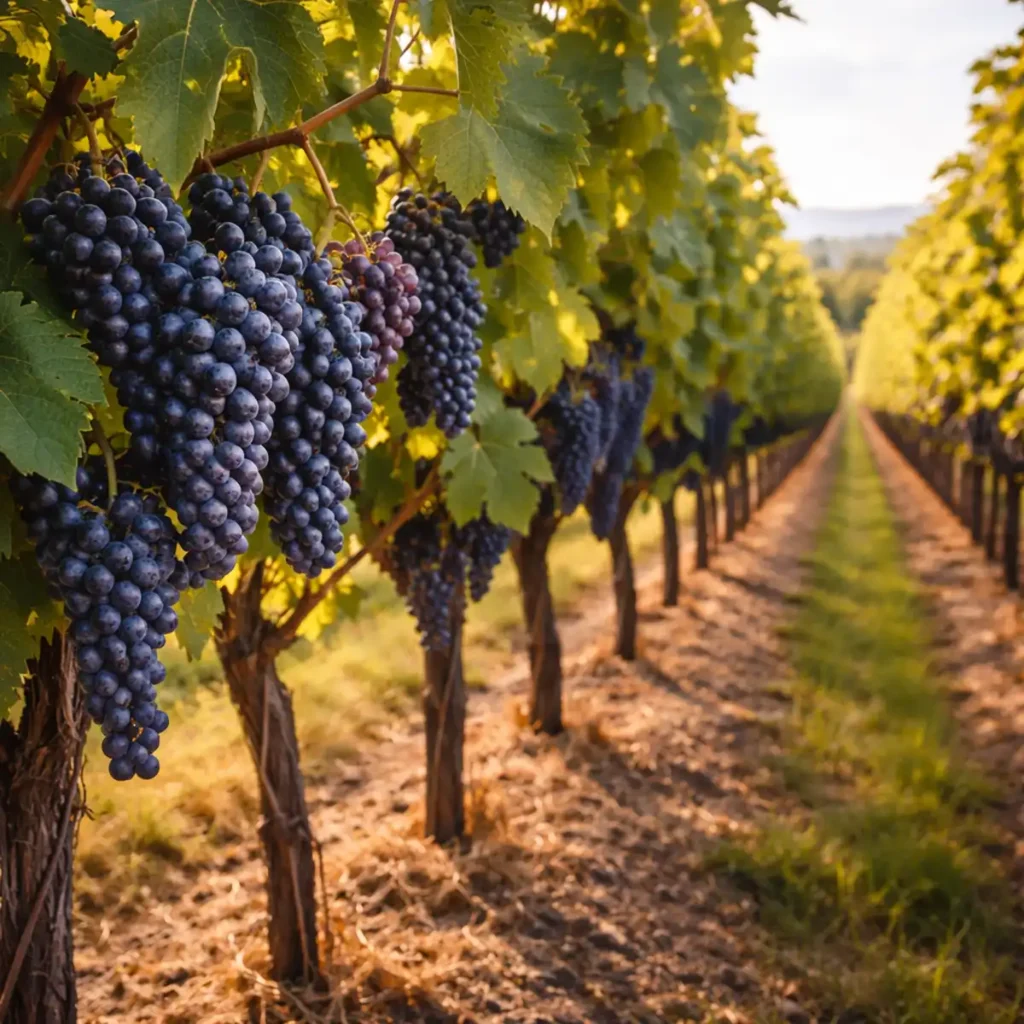
The cellar is only half the equation. Vegan integrity starts with vineyard quality. Organically or biodynamically grown grapes arrive cleaner, with lower spoilage pressure. Sound fruit needs less antimicrobial protection. That is why many certified producers can run lower free SO2 while maintaining security. In the winery, temperature-managed ferments, reliable nutrient strategies that avoid animal products, and strict hygiene reduce risk before filtration is considered. When filtration is used, it becomes the final, light touch in a chain of gentle decisions. The outcome is a wine that reads as pure rather than processed. Acidity feels better integrated. Fruit feels more transparent. The finish is longer because colloids and fine tannins remain in solution.
Crossflow set-up and validation
Installing a crossflow unit is not plug-and-play. Wineries build protocols that cover membrane choice, clean-in-place cycles, integrity testing, flux monitoring, and hold-time limits. Validation includes particle-challenge tests and routine integrity checks conducted before each bottling shift. Oxygen pickup is tracked at the inlet, retentate, and permeate. Many cellars sparge with inert gas to keep dissolved oxygen below set thresholds throughout the wine, from the wine to the cork or cap. In sensory validation, batches are bench-filtered at a small scale and blind-assessed against unfiltered controls for fruit expression, texture, and perceived dryness. Where differences are detected, settings are adjusted by pore rating, crossflow velocity, and transmembrane pressure until the panel reports parity or improvement. The goal is not maximum polish. It is targeted stability with no sensory penalty.
Texture, tannin and colour in reds
Red wine programmes once avoided any filtration for fear of thinning the mid-palate. Cross flow has altered that calculus. At appropriate settings, polymeric pigments and pigmented tannins that anchor colour and body remain largely unaffected. What moves out are fine lees, colloidal haze, and residual microbes. Trials on cool-climate Pinot Noir and natural wine styles with moderate extraction show that aromatic lift often increases after crossflow, as reductive off-notes drop. The palate reads clearer yet not lighter. In warmer climates, higher-tannin reds: careful settings avoid shifting perceived dryness. The practical learning is simple. If the wine is built on balanced extraction and time on lees, modern filtration can protect that structure rather than erase it.
Aromatics and stability in whites and rosés
Whites and rosés are sensitive to oxygen and heat instability. The combination of low oxygen handling, optional Bentonite, and crossflow produces bottles that retain their lime, peach, or saline notes under real-world shipping conditions. Membranes retain the mannoproteins released during extended lees contact. Those compounds add creaminess without masking acidity, in aromatic styles such as Riesling, Sauvignon Blanc, or Albariño. A short membrane pass before bottling reduces the risk of refermentation when residual sugar is present. That keeps pressure out of the glass and fizz out of the wrong styles, all while preserving the lifted aromatics.
Low intervention and low SO2 together
A frequent concern is whether lower sulphite regimes invite instability. The answer is that technology lowers the risk envelope. When microbial load is removed physically at the final step, a producer can bottle at lower free SO2 and still protect against spoilage. That matters to sensitive drinkers, and it aligns with the ethics of minimal additives. It also fits the quality goal. High free SO2 can bind and mute volatile aromatics. Lower levels help fruit and savoury complexity read more clearly on first pour. Crossflow gives the margin of safety that makes those choices rational rather than risky.
Operations, cost, and scale
Crossflow units represent capital expenditure and require trained operators. For small cellars, mobile services offer an alternative. The cost must be weighed against loss rates from unstable bottles, returns due to haze or refermentation, and the reputational damage from faults. For vegan programmes, the equipment replaces recurring spend on animal finings and simplifies wastewater management because no proteinaceous waste enters the stream. Over multiple vintages, the economic case often favours crossflow where export markets demand consistent clarity and shelf stability.
Labelling, certification and consumer trust
Vegan certification audits the whole production chain. Using crossflow helps simplify compliance. There is no need to document non-animal fining on a lot-by-lot basis where none exists. Organic or biodynamic certifications focus on vineyard inputs and broader cellar rules. The trio of vegan, organic, and biodynamic stamps signals to buyers that the wine is free of animal products, grown without synthetic agrochemicals, and produced within tightly controlled cellar standards. Transparent technical processes underpin those claims. When a producer can show membrane integrity logs, oxygen curves, and bottling records, trade partners and consumers gain confidence that the wine will reach them as intended.
Tasting the outcome
In the glass, gently filtered vegan wines tend to open with cleaner aromatics and a more precise line of fruit. Texturally, they feel complete because mannoproteins and fine colloids remain. The mid-palate carries weight without heaviness. Finishes are longer where phenolic bitterness is controlled, and microbial taints are absent. For ageworthy bottles, the reduction in microbial load lowers the risk of developing faults during cellaring. For ready-to-drink cuvées, clarity and brightness are more consistent across cases and shipments. The technology is audible only in its silence. Nothing noisy interferes with the vineyard voice.
Fun fact: Crossflow membranes used in wineries are adapted from biomedical and water purification fields, where gentle, selective separation at low pressure is essential to protect delicate molecules.
Practical pairing with plant-based cuisine
Because the approach protects acidity and texture, cross-flow-finished vegan wines work across modern plant-based menus. A lees-aged vegan Chardonnay with preserved mannoproteins will frame cashew cream sauces without feeling hollow. A skin-contact white retains grip for miso-glazed aubergine. A bright, low-SO2 Pet-Nat stays stable on the shelf yet brings refreshment to spice-led dishes. The technology sits behind the scenes while the food and wine pairing does the talking.
When not to filter
There are times not to filter. If a wine is bone dry, microbially stable, and destined for quick consumption, extended settling and racking may suffice. If a stylistic haze is part of the intention and the producer accepts the trade-offs, clarity is optional. The decision tree starts with risk assessment, then market expectations, and then the sensory goal. The crucial point is that filtration is a choice, not a necessity. When chosen and executed well, it serves the wine.
Sustainability and waste
Removing animal finings reduces proteinaceous waste in winery effluent. Vegan wine programmes that use crossflow generate retentate and spent cleaning solutions, both of which can be managed under standard wastewater plans. Many cellars combine the approach with renewable electricity and heat recovery in hot-water cycles to lower the carbon and energy footprint of filtration. A clear technical standard can coexist with a clear sustainability policy.
The consumer takeaway
If the back label lists crossflow filtration and vegan certification, it signals that the producer is investing in precise stability rather than brute force. Expect clean aromas, intact texture, and a steady shelf life. If the label highlights gravity settling and time with no filtration, expect a different texture and, sometimes, a light haze. Both paths can make excellent wine. The point is informed choice. Modern filtration is not the enemy of flavour. It is a tool that, in the right hands, protects it.
Conclusion
The old filtration fear grew from high-pressure, oxygen-exposed systems that traded purity for polish. Today’s crossflow membranes solve that problem with gentle, selective separation. They underpin vegan wine programmes by eliminating the need for animal finings and supporting low-SO2 strategies without risking instability. They preserve aroma, texture, and colour while delivering the security that trade and consumers require. Minimal intervention is a method, not a myth. Engineering now gives it a stable, evidence-based footing.


