
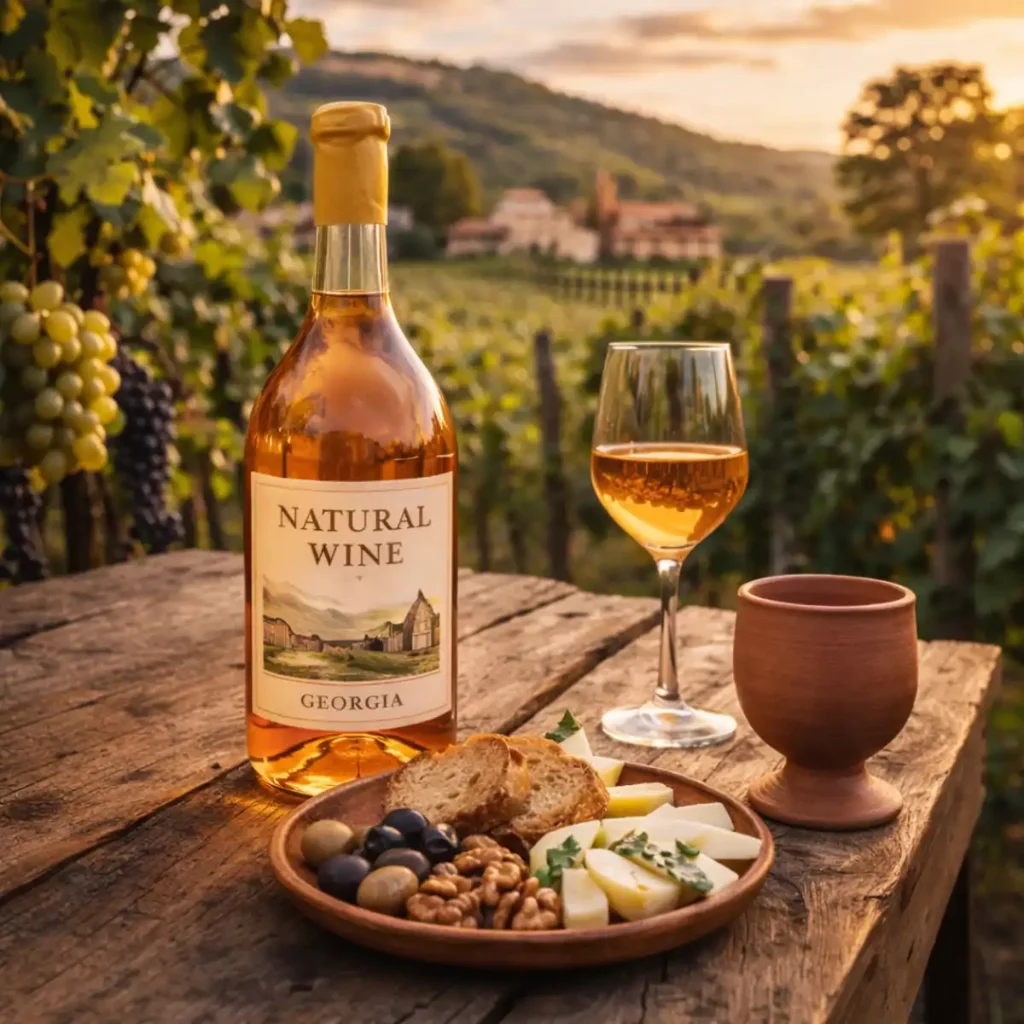
A qvevri is an egg-shaped clay vessel, sealed with beeswax on the interior, buried in the earth of a Georgian winery up to its shoulder, where the constant cool temperature of the ground keeps the fermenting wine stable. Wine has been made in qvevri in what is now the Republic of Georgia for at least 8,000 years, making the South Caucasus the oldest wine-producing culture yet identified by archaeological evidence. In 2013, UNESCO added the Georgian qvevri winemaking tradition to its Intangible Cultural Heritage list.
Georgian natural wine is not a new discovery. It is the oldest winemaking practice currently in active use anywhere on the planet, and it has been reshaping how the global natural wine community thinks about minimal intervention since the early 2000s. The producers working in Kakheti and Kartli today are making wine the way their great-grandparents made wine, and the way their great-grandparents’ great-grandparents made it before that.
What a qvevri does to wine and why it matters
The qvevri is not merely a container. Its shape, material, and burial in the earth create a specific fermentation environment that differs from stainless steel, concrete, or oak in ways that affect the finished wine significantly.
During fermentation, the grape juice — often with skins, seeds, and stems included, particularly for white wines — ferments at the stable cool temperature of the buried vessel. The clay is slightly porous, allowing a very slow micro-oxygenation of the wine as it ferments and matures, comparable in effect to the slow oxygen exchange through oak barrel staves but without any wood flavour contribution. The egg shape encourages natural lees circulation during fermentation, keeping the yeast cells active without pumping or stirring. After fermentation, the lees settle to the point of the vessel and the wine clarifies naturally over several months.
The result of making white wine in a qvevri with extended skin contact is Georgian natural wine in its most distinctive form: amber in colour, deeply structured, with tannins from the grape skins and stems, and a savoury, dried fruit, tea-like complexity that is entirely unlike skin-contact wines made in any other vessel type.
Fun fact: The 2017 discovery of pottery fragments containing grape residue at a site in the village of Gadachrili Gora, south of Tbilisi, pushed the earliest confirmed evidence of qvevri winemaking in Georgia back to approximately 6000 BCE, making it the oldest confirmed evidence of grape wine production anywhere in the world.
The key Georgian grape varieties for UK buyers
Georgia has over 500 documented indigenous grape varieties, the highest density of viticultural diversity anywhere in the world. For UK buyers encountering the category for the first time, the most relevant are the following.
Rkatsiteli is the most widely planted white variety in Kakheti, Georgia’s primary wine-producing region in the east of the country. In a qvevri with extended skin contact of 4 to 6 months, Rkatsiteli produces a deep amber wine with dried apricot, quince, beeswax, and a long mineral finish. Its naturally high acidity keeps the wine fresh despite the structural tannin. Good examples from serious Kakhetian producers age well over 5 to 10 years, developing additional complexity without losing the saline precision of the fresh wine.
Mtsvane Kakhuri is a lighter, more aromatic variety typically blended with Rkatsiteli in traditional Kakhetian wines, adding floral notes and citrus brightness to Rkatsiteli’s structural weight. Single-variety Mtsvane in a qvevri is less common but produces wines of considerable elegance.
Saperavi is Georgia’s most important red variety. The name translates roughly as ‘dye’ in Georgian, a reference to the grape’s unusually dark juice; it is one of the few wine grapes with pigment in the flesh as well as the skin. Naturally made Saperavi from Kakheti, fermented in qvevri with whole-bunch inclusions, produces deeply coloured, structured red wine with dark cherry, pomegranate, and a distinctive mineral-iron quality. Properly made, it ages for 15 or more years.
Kakheti and Kartli — two distinct regional registers
Georgian wine production is concentrated in 2 principal regions. Kakheti, in the east, accounts for roughly 70% of all Georgian wine and is the spiritual home of qvevri winemaking and the extended skin-contact style. The Alazani Valley in Kakheti is lined with family wineries, many producing wine from the same family vineyards for generations, who maintained the qvevri tradition through the Soviet period when industrial production methods were imposed and who returned to traditional methods as the republic regained independence in 1991.
Kartli, immediately west of Tbilisi, produces wines in a lighter register. The soils are different, more clay and volcanic in composition, and producers here often use qvevri with shorter skin contact of 2 to 4 weeks, producing amber wines with less tannin and more pronounced fruit character than Kakhetian equivalents. For UK buyers trying Georgian natural wine for the first time, a Kartli wine or a medium-maceration Kakhetian often provides a more accessible entry point than a deeply structured 6-month qvevri wine.

Georgian wine in the UK market in 2024 and 2025
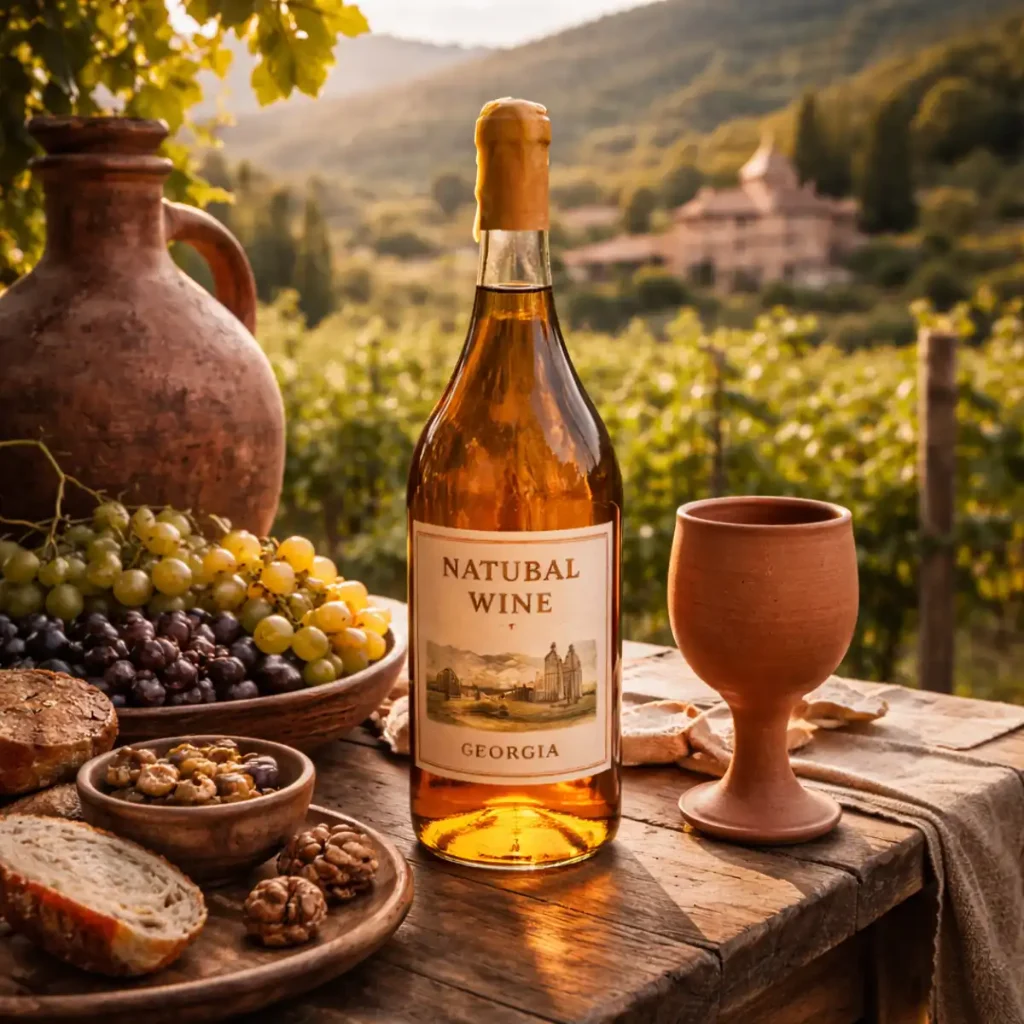
The UK natural wine market has shown consistent growth in Georgian imports through 2023 and 2024. Importers who have represented Georgian producers since the early 2000s report year-on-year increases in Georgian wine sales to both trade and retail buyers, with the strongest growth in the medium-maceration Rkatsiteli style: 3 to 4 months of skin contact rather than the traditional 6, producing wines with the characteristic amber colour and structural depth of Kakhetian winemaking but in a more immediately approachable register.
The price range for good Georgian natural wine in the UK is typically £18 to £38. At the lower end of this range, the wines represent some of the most distinctive and genuinely original natural wine available in the UK for the money — styles that have no Western European equivalent and that are drawing consistent interest from sommeliers building lists that show genuine regional depth.
How to approach Georgian wine for the first time
Treat your first qvevri wine as you would treat a new food rather than a familiar wine style encountered in an unfamiliar bottle. Pour it at 14 to 16 degrees Celsius: warmer than you would serve a conventional white, cooler than room temperature. Give it 15 minutes to open. The first pour from a qvevri-made Rkatsiteli will often show a concentrated, almost austere quality; 10 minutes later, the aromatics have expanded, and the wine becomes far more generous.
Pair it with food that has a strong flavour and some fat or salt: aged hard cheese, walnut-based dishes, roast root vegetables, or cured fish. The tannin in a qvevri-made white wine is there to stand up to food rather than to be drunk as an aperitif. In this structural respect, it behaves more like a light red than a white, and the most natural companions are dishes with umami depth and some textural weight.
The reason to start here
Georgian natural wine is a category that rewards patience and resists quick judgments. The first encounter with a deeply structured qvevri-made amber can be disorienting if you approach it expecting conventional white wine. The approach worth taking is the one Tom Natan, a London-based Georgian wine importer, describes as the only one that works: approach it as something genuinely different, a wine made in the oldest known tradition, from grapes grown in the oldest wine culture, and give it the kind of attention you would give to a dish you had never encountered before.
Start with a Kartli amber or a lighter-maceration Kakhetian Rkatsiteli at around £20, pair it with something substantial, and give it time. Georgian natural wine at its best is not competing with anything else in the market. It is its own entirely coherent argument for why wine can taste like this, made in this place, from these grapes, by this method, and by no other.


